 ZebraZones

Wrong labels, empty shelves
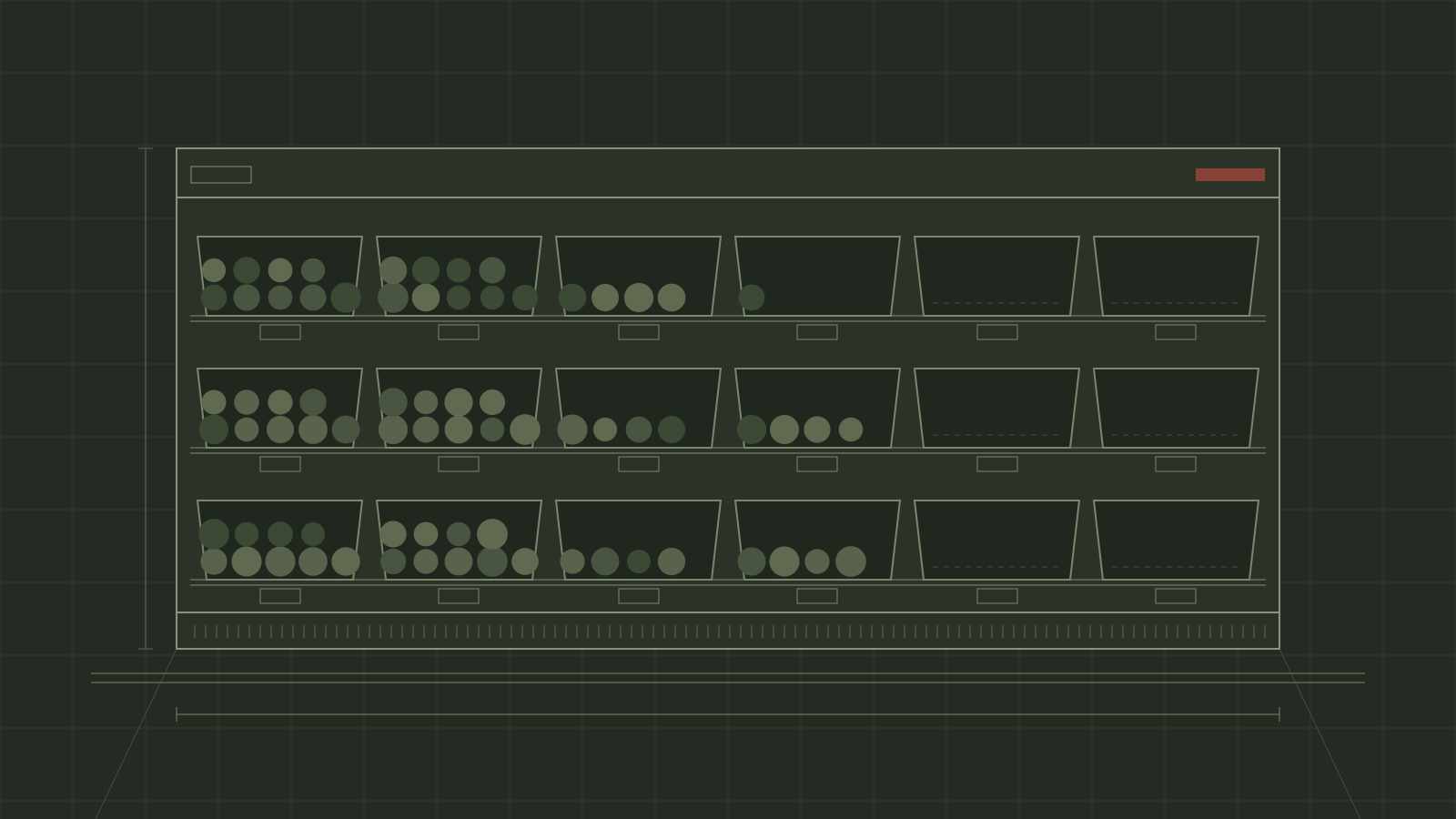
A new week starts at Albert Heijn, the biggest supermarket chain in the Netherlands. But the shelf labels are still wrong. They show last week's discount. The fruit and vegetable section is half empty. That was Monday, October 12.
The day before, the parent company, Ahold Delhaize, had detected a cybersecurity problem in its network and switched off its own systems. In the United States, five of its sister chains, including Food Lion and Stop & Shop, lost their websites and apps as well.
Pulling the plug
On Sunday afternoon, Albert Heijn's security staff first noticed suspicious traffic coming into the network, and they decided to pull the plug. Full system shutdown.
All online deliveries stopped. At the Dutch distribution center, operations froze. Executives warned that shelves would soon be empty, mainly of fresh products, and they were right. The stores themselves stayed open.
On Tuesday, the company began what it called a controlled restart. By Thursday, the distribution centers were running again, and soon the shelf prices were correct. Home delivery is still suspended and scheduled to restart from Friday, October 23.
What we know about the attack
The group behind the attack is still unknown, but here's what we know about the attack itself. The attackers breached the company's network. Security staff spotted the attack, and the systems were switched off. How exactly the attackers first got in has not been confirmed yet.
Switching off the systems was the right call. It's standard practice when you detect an intruder. You disconnect the affected systems before the attackers can reach more of them.
Why switching off is so expensive
But for a supermarket, switching off the logistical IT is very expensive. Food security experts explain that stores hold almost no stock of their own. They rely on computer-planned deliveries from central distribution centers, arriving just in time, with about six days of supply in stores and warehouses combined. When the logistics systems stop, the sales stop as well.
Current estimates place the losses at more than 10 million euros.
Let's look into the anatomy of the attack and its defense. Barely any time passed until the attack was detected and contained. That is excellent, but it still causes an enormous loss of revenue. So how could a company prepare even better for similar attacks?
A simplified fallback system
Imagine a second, simplified fallback logistics system. It is kept separate from the main one and ready to take over at any time. It doesn't need every feature. It only needs to keep planning deliveries, so that trucks keep driving while the main systems are off and being investigated.
Which data do you feed it?
The hard question is which data you feed it. The live data sits in the system you just switched off, so you can start from an older copy, a snapshot taken before the attack, and some inventory numbers will be slightly wrong.
Imagine the online store shows eight crates of milk in stock, but there are only six left. Two customers might order milk that is not there. Once the mismatch shows up, you delay those orders or refund them. That's not ideal. It's still much better than a complete shutdown, when nobody gets anything.
There are ways to make that data more accurate, like sensors and cameras in warehouses and stores that count what's actually there. But the basic idea works without them. A simpler system as a fallback keeps the trucks moving and the revenue flowing.
Does it make economic sense?
Does it make economic sense to build such a system? Five years ago, the answer would have been no. A second logistics system costs a lot to build and maintain, for an attack that might never come.
AI agents have changed both sides of that calculation. First, building software has become much cheaper, because AI agents now write and test much of the code. A minimal fallback system costs a fraction of what it used to.
Second, attacks have become much more likely. In 2026, every cybercriminal has an army of highly intelligent AI agents working around the clock to find weaknesses, automate attacks, adapt in real time and operate at a scale that once required an entire hacking organization.
In summary, fallback systems are now cheaper to build and more likely to be needed. Today, every mission-critical system should have an alternative to switch to.
Who makes sure it exists?
Who makes sure that an alternative system exists? Let's look at the parties involved. The supermarket is focused on logistics, prices and margins. Its IT suppliers make sure the systems work under normal conditions. The internal security operations center spots attacks and initiates shutdowns.
When automated agents can examine connected systems for vulnerabilities at machine speed, stopping one infected system should not stop the ability to generate revenue. A dedicated cybersecurity partner becomes essential, one that assesses how the divisions and suppliers are connected and makes sure every mission-critical system has an emergency alternative.
And protecting enterprise systems against cybersecurity threats is the mission of ZebraZones. In an age where millions of autonomous AI agents will attempt to attack your systems, you need a cybersecurity authority that ensures your safety.
That's it for today. For more on AI security, follow this channel, enable notifications and like this video.
References
Sources & further reading
- 01SecurityWeek, “Cyberattack Prompts Grocery Giant Ahold Delhaize to Disconnect Systems”
- 02NL Times, “Albert Heijn outage very likely a cyber attack, experts say”
- 03NL Times, “No grocery deliveries until at least Sunday”
- 04FreshPlaza, “Cyber incident leaves Albert Heijn's fruit and vegetable shelves empty”
- 05DutchNews, “Albert Heijn owner files police report over cyberattack”